
The Impact of AI on Human Life
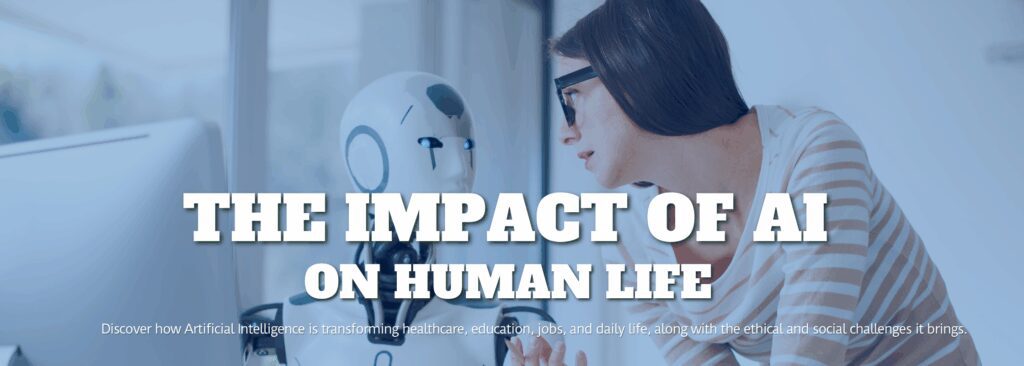
The Impact of AI on Human Life: Artificial Intelligence (AI) has rapidly transformed from a futuristic concept into an integral part of everyday life. From smartphones that understand voice commands to complex algorithms driving business decisions, AI is reshaping the way humans live, work, and interact with the world. Its influence spans across numerous domains, presenting both immense opportunities and significant challenges. This article explores the multifaceted impact of AI on human life, highlighting how it enhances efficiency, revolutionizes industries, raises ethical questions, and reshapes societal norms. You also know about the types of AI.
Revolutionise Your Video Content in Minutes
Understanding Artificial Intelligence
Before diving into the impact, it is essential to understand what AI is. Artificial Intelligence refers to the simulation of human intelligence processes by machines, especially computer systems. These processes include learning (acquiring information and rules for using it), reasoning (using rules to reach approximate or definite conclusions), and self-correction. AI systems can be broadly classified into:
- Narrow AI: Designed to perform specific tasks such as speech recognition or recommendation engines.
- General AI: Hypothetical systems that possess the ability to understand, learn, and apply knowledge across a wide range of tasks like a human.
- Superintelligent AI: An advanced form of AI that surpasses human intelligence across all fields.
Currently, Narrow AI dominates practical applications, driving real-world changes in various sectors. The Next Generation of AI-Powered Video Creation.
How AI Is Impacting Human Life
Enhancement of Daily Life
AI has seamlessly integrated into everyday human activities, making life more convenient and efficient:
- Virtual Assistants: Devices like Amazon Alexa, Google Assistant, and Apple’s Siri use natural language processing to help users with tasks such as setting reminders, controlling smart home devices, or searching the web.
- Personalized Experiences: AI algorithms analyze user behavior to provide personalized recommendations on platforms like Netflix, Spotify, and Amazon, enhancing entertainment and shopping experiences.
- Smart Homes: AI controls heating, lighting, and security systems, allowing for energy efficiency and increased safety.

Sponsored: Discover how Revid AI simplifies video creation
Learn More: Revid AI: The Next Generation of AI-Powered Video Creation
Transformation of the Workforce
AI is drastically changing the nature of work, creating both opportunities and challenges:
- Automation of Routine Tasks: AI-powered robots and software can perform repetitive and time-consuming tasks, from manufacturing assembly lines to data entry, freeing humans for more creative and strategic roles.
- New Job Creation: While AI displaces certain jobs, it also creates new roles in data science, AI ethics, machine learning engineering, and AI maintenance.
- Workplace Productivity: Tools powered by AI, such as chatbots, scheduling assistants, and predictive analytics, enhance workplace efficiency and decision-making.
However, this transformation raises concerns about job displacement and the need for workforce reskilling.

Healthcare Revolution
One of the most promising impacts of AI is in healthcare:
- Diagnostics and Imaging: AI algorithms can analyze medical images with high accuracy, helping detect diseases like cancer earlier than traditional methods.
- Personalized Medicine: AI can analyze genetic data and medical histories to tailor treatments specific to individual patients.
- Drug Discovery: AI accelerates the process of discovering new drugs by predicting molecular behavior and simulating clinical trials.
- Remote Monitoring: Wearable devices powered by AI monitor vital signs and alert healthcare providers of potential issues.
These advancements improve patient outcomes, reduce costs, and expand access to care, especially in underserved areas.
Education and Learning
AI is reshaping education by personalizing learning and broadening access:
- Adaptive Learning Platforms: AI-driven educational software adjusts content based on the learner’s pace and style, optimizing understanding.
- Language Translation and Accessibility: AI tools break language barriers and provide real-time translations, making education more inclusive globally.
- Automation of Administrative Tasks: AI reduces educators’ workload by automating grading and attendance tracking.
Despite these benefits, challenges exist in ensuring equal access to AI-based education technologies.

Sponsored: Fliki Turns Ideas into videos with AI voices
Smart Cities and Environmental Impact
AI plays a critical role in building sustainable and efficient urban environments:
- Traffic Management: AI analyzes real-time data to optimize traffic flow, reduce congestion, and lower emissions.
- Energy Management: Smart grids powered by AI predict energy demand and integrate renewable sources efficiently.
- Waste Management: AI-driven systems optimize waste collection routes and recycling processes.
- Environmental Monitoring: AI helps track pollution levels and predict natural disasters, aiding in proactive responses.
By fostering sustainability, AI contributes to combating climate change and improving quality of life.
Enhanced Security and Surveillance
AI has transformed security through advanced monitoring and threat detection:
- Facial Recognition: Used for identifying individuals in public spaces, enhancing law enforcement, and access control.
- Cybersecurity: AI detects unusual network behavior, preventing cyberattacks and safeguarding sensitive data.
- Predictive Policing: AI analyzes crime data to predict potential hotspots, enabling preemptive measures.
While improving security, these applications raise serious concerns about privacy, surveillance overreach, and civil liberties.

Sponsored: VidIQ All-in-One Platform for YouTube Growth
Ethical and Social Challenges of AI
Despite its transformative potential, AI presents significant ethical dilemmas and social challenges:
1. Job Displacement and Economic Inequality
Automation threatens many low-skill and repetitive jobs, potentially leading to increased unemployment and widening economic disparities. While new jobs may emerge, not everyone can transition easily, necessitating robust social safety nets and reskilling programs.
2. Bias and Fairness
AI systems learn from data that often reflects human biases. If unchecked, AI can perpetuate discrimination based on race, gender, or socioeconomic status, impacting decisions in hiring, lending, and law enforcement.
3. Privacy Concerns
AI’s ability to collect and analyze vast amounts of personal data challenges traditional notions of privacy. There is a risk of the misuse of sensitive information by corporations or governments.
4. Autonomy and Accountability
As AI systems make more decisions autonomously, questions arise about accountability. For example, if a self-driving car causes an accident, who is responsible—the manufacturer, programmer, or user?
5. Existential Risks
Looking further ahead, the development of superintelligent AI raises theoretical concerns about human control and safety, prompting calls for cautious research and regulation.
The Role of Governments and Society
The impact of AI on human life is not determined solely by technology but by the policies, governance, and ethical frameworks guiding its development and use.
1. Regulation and Standards
Governments worldwide are working on AI regulations to ensure safety, fairness, and transparency. Regulations focus on data protection, algorithmic accountability, and ethical AI design.
2. Education and Workforce Development
Preparing societies for the AI-driven future requires investment in education, lifelong learning, and vocational training to equip workers with skills relevant to new job markets.
3. Inclusive Innovation
Ensuring that AI benefits all parts of society means addressing digital divides, promoting diversity in AI development teams, and encouraging technologies that serve marginalized communities.
4. Global Cooperation
AI challenges and opportunities are global, requiring international cooperation to address cross-border issues such as AI ethics, security, and economic impact.
The Future of AI and Human Life
Looking forward, AI’s role in human life will likely deepen and become even more nuanced:
- Human-AI Collaboration: AI will increasingly augment human capabilities rather than replace them, leading to new forms of teamwork between humans and machines.
- AI in Creativity and Innovation: AI-generated art, music, and literature will redefine creative fields, raising questions about authorship and originality.
- Emotional AI and Social Interaction: Advances in affective computing will enable AI to understand and respond to human emotions, potentially transforming social interactions and mental health care.
- Ethical AI as a Priority: Responsible AI development will become central to research, balancing innovation with societal values.
Conclusion: The Impact of AI on Human Life
Artificial Intelligence is undeniably reshaping human life in profound ways. It enhances convenience, drives economic growth, revolutionizes healthcare and education, and helps address environmental challenges. In conclusion. At the same time, it brings ethical dilemmas, privacy concerns, and risks of inequality that society must actively manage.
The true impact of AI on humanity depends not only on technological advances but on how thoughtfully we govern, regulate, and integrate AI into our lives. Embracing AI’s benefits while mitigating its risks requires collaboration across governments, industries, academia, and civil society. With responsible stewardship, AI holds the promise of a future where technology amplifies human potential, making life better for all.
FAQs: The Impact of AI on Human Life
1. What is Artificial Intelligence (AI)?
AI is the simulation of human intelligence in machines that are programmed to think, learn, and perform tasks typically requiring human intelligence, such as problem-solving, language understanding, and pattern recognition.
2. How is AI currently used in everyday life?
AI powers virtual assistants like Siri and Alexa, personalized recommendations on streaming platforms, smart home devices, navigation apps, fraud detection in banking, and much more.
3. Will AI take away human jobs?
AI will automate some routine and repetitive jobs, but it will also create new job opportunities, especially in technology, data analysis, and AI maintenance. Reskilling and education are key to adapting to this shift.
4. How does AI impact healthcare?
AI improves diagnostics, personalizes treatment plans, accelerates drug discovery, and enables remote patient monitoring, leading to better healthcare outcomes and accessibility.
5. What are the ethical concerns related to AI?
Ethical issues include bias and fairness in AI decision-making, privacy violations, accountability in autonomous systems, and potential misuse of AI technologies.
6. Can AI systems be biased?
Yes, AI systems can inherit biases present in their training data, leading to unfair or discriminatory outcomes. Ensuring diverse, representative data and transparent algorithms is critical.
7. How is AI transforming education?
AI personalizes learning experiences, automates grading, provides real-time language translation, and helps educators manage administrative tasks more efficiently.
8. What role do governments play in AI development?
Governments set regulations and standards to ensure AI safety, fairness, and privacy, promote research, and facilitate workforce development and inclusive access to AI technologies.
9. How does AI help in environmental sustainability?
AI optimizes energy use, manages smart grids, reduces waste, improves traffic flow to cut emissions, and monitors environmental changes for proactive disaster management.
10. What does the future hold for AI and humans?
Future AI systems will increasingly collaborate with humans, augment creativity and innovation, understand emotions, and require ethical frameworks to guide safe and inclusive use.